

Late diagnosis ADHD is not uncommon
“I thought everyone felt like this”
For years, maybe even decades, you’ve battled a constant inner storm.
You lost keys and forgot appointments. You bounced between hyperfocus and total paralysis. You were exhausted from overthinking every conversation. Sometimes you felt brilliant, and other times completely overwhelmed by the smallest task.
And then, one day, a podcast episode, a TikTok, a blog post, or a passing comment opened the floodgates. It described a world that felt uncomfortably familiar, a brain that worked like yours.
The more you read, the more it clicked: “Wait. That’s me. That’s how I’ve always been.”
Welcome to the reality of late diagnosis ADHD. It’s not uncommon. Many people are diagnosed in adulthood, often after years of being misunderstood by others and, more importantly, themselves.

Why is ADHD so often missed?
ADHD is a neurodevelopmental condition that affects the way people focus, manage time, regulate emotions, and organise tasks. The term ADHD (attention deficit hyperactivity disorder) doesn’t quite capture the full picture. Many adults with ADHD don’t seem outwardly hyperactive, and their attention isn’t lacking; it’s just hard to regulate.
So how does it go undetected?
Some common reasons ADHD is missed:
- You may have been high achieving in certain areas, masking your difficulties.
- You may have developed complex coping strategies to get by.
- You might have been told you were lazy, disorganised, or “just not trying hard enough.”
- You might not have displayed disruptive or ‘classic’ behaviours in childhood.
- You may have been misdiagnosed with depression, anxiety, or another condition (it is believed that up to 80% of those with an ADHD diagnosis also have a diagnosis of a mental health condition).
- You might have internalised your symptoms (this is particularly relevant for females, and it is believed that there is a significant under-diagnosis of ADHD in females).
- You might have spent your life in a constant state of overcompensation, working twice as hard as others to stay afloat.

Before your ADHD diagnosis
When we speak to adults who’ve only recently received an ADHD diagnosis, or who are in the process of exploring one, certain patterns come up time and again. It’s not that you were coasting through life, far from it. You were working incredibly hard just to keep up.
If this sounds familiar to you, you might relate to some of these traits:
- Chronically disorganised, despite endless attempts at systems and routines
- A to-do list that felt more like a guilt list
- Constant procrastination, followed by frantic bursts of last-minute brilliance
- Trouble getting started (or stopping) once in the zone
- Forgetting names, dates, and sometimes entire conversations
- Emotional highs and lows that others didn’t seem to experience
- An internal monologue filled with shame, doubt, and “why can’t I just…?”
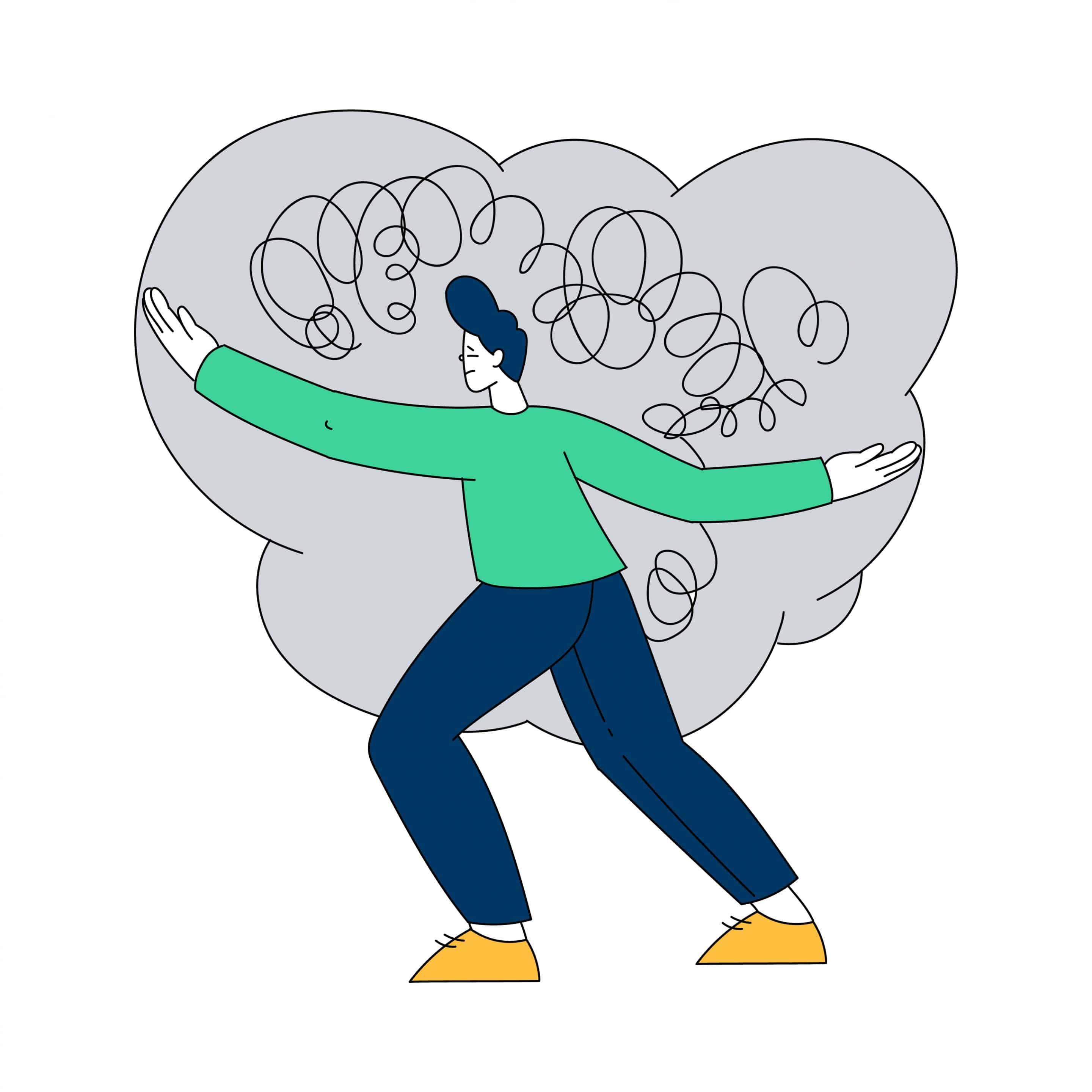
These aren’t just habits. They’re executive function challenges, core features of ADHD.
And often, the outside world fails to see your struggle.
You may appear smart, chatty, capable, often the life and soul of the party. But beneath the surface, you are masking every day, in every setting of your daily life.
The lightbulb moment and the emotional rollercoaster
For some people, the realisation builds slowly with a growing sense that something doesn’t quite add up. For others, it hits all at once. You may have a realisation after a friend is diagnosed, or your child is assessed, where the patterns suddenly reflect right back at you.
It’s a powerful moment. But it’s also disorienting. You’re not just discovering a diagnosis, you’re rewriting your life story.
Receiving a late ADHD diagnosis, or even strongly self-identifying can bring a flood of mixed emotions:
Relief
Finally, there’s an explanation. You’re not lazy, unmotivated, or disorganised; you have a brain that’s been working overtime to survive in a world not designed for it.
Hope
Finally, maybe there’s support that can help. Whether it’s medication or practical strategies, now you recognise what is happening you can learn to manage it effectively.
Grief
You may look back at school, work, relationships, and realise how different things might have been with the right support. That grief is real and valid.
Anger
At yourself, for not seeing it. At others, for not helping. At systems that missed the signs.
Identity Confusion
Who are you really? If the “you” that people saw was shaped by coping strategies, what happens when you stop trying to mask?
This emotional fallout is common, and it’s okay to feel all of it. Most people we work with who have been diagnosed with ADHD as an adult or are self-identifying for the first time, take a lot of time to process their new world.
Diagnosis isn’t the finish line; it’s the beginning of understanding yourself and self-compassion.

ADHD strengths
Late diagnosis ADHD isn’t just about what’s hard. Once the fog lifts, many adults begin to see what they bring to the table.
You might be:
- Brilliant under pressure
- Exceptionally creative
- Emotionally insightful
- Able to hyperfocus and produce outstanding work
- Driven by passion and values
- Adaptable in fast-changing situations
- Exceptionally empathetic
These traits aren’t separate from your ADHD; they often exist because of it. The challenge is managing the environment, demands, and overwhelm so that your strengths can thrive without costing your health.
The hidden sides of ADHD
Burnout
Many adults with ADHD have experienced burnout, often without recognising it. ADHD burnout is a state of constant mental and physical exhaustion due to chronic stress. This is the result of constantly forcing your brain to work in ways it’s not wired to.
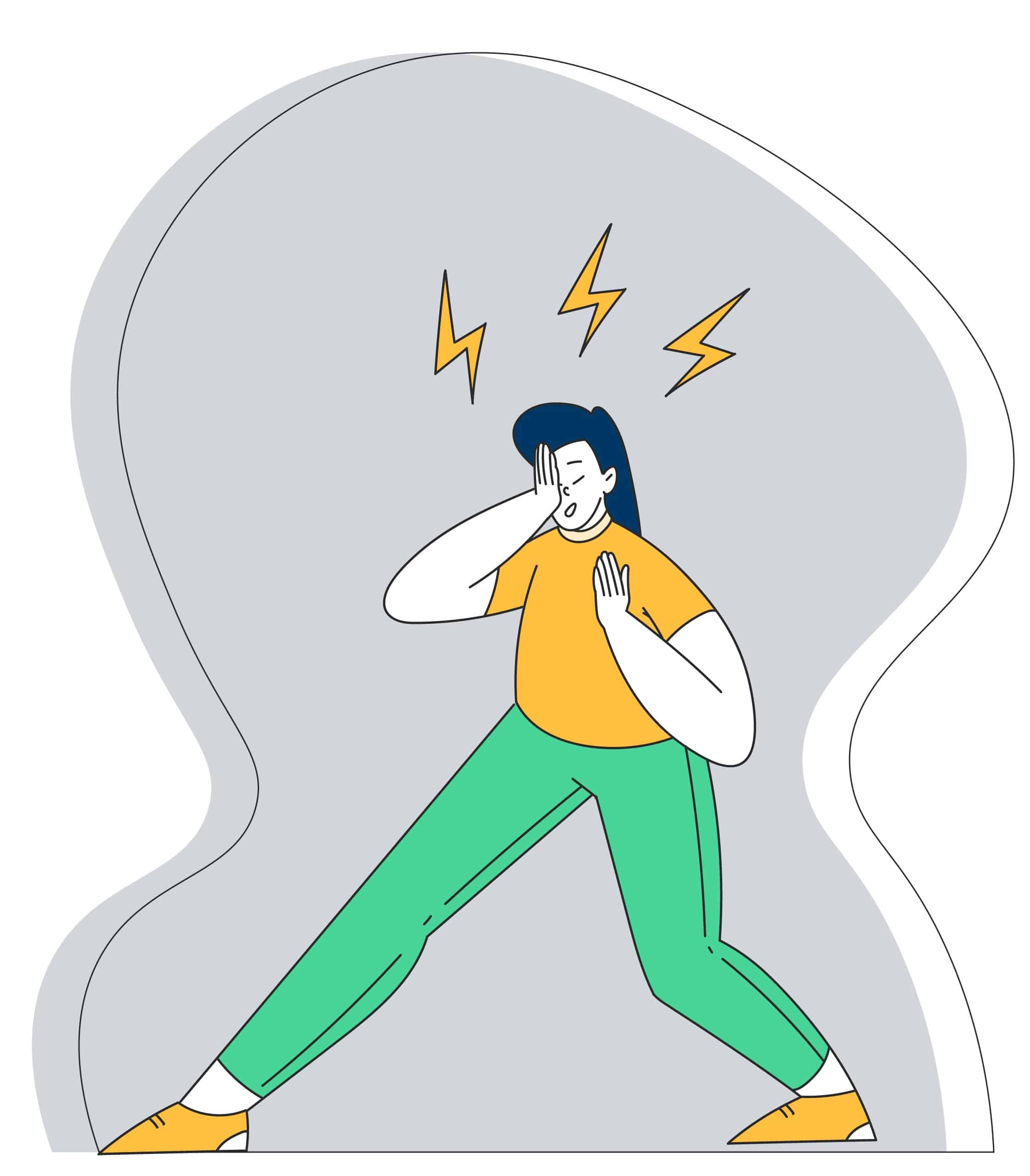
Burnout can look like:
- Constant fatigue
- Emotional meltdowns
- Overwhelm from simple decisions
- “Freezing” when facing daily tasks
- Feeling like you’re always behind, no matter how hard you try
While burnout is not a mental health diagnosis, it can significantly affect your wellbeing and can be a contributing factor to other mental health conditions.
It’s important to recognise ADHD burnout and start to prioritise your wellbeing with the right strategies and support.
Rejection sensitivity dysphoria
There’s a phenomenon known as rejection sensitivity dysphoria (RSD); a term used to describe the intense emotional pain people with ADHD often feel in response to perceived criticism, failure, or rejection.
It’s still being debated in the scientific community, and not officially listed in diagnostic manuals, but many clinicians are reporting a cluster of symptoms and behaviours that include:
- Ruminating for hours over a small interaction
- Feeling physically sick after making a mistake
- Avoiding confrontation to the point of self-sabotage
It can have a very real impact on your everyday life. It’s not about being overly emotional. It’s about having a nervous system wired for alertness and protection, constantly bracing for something to go wrong.
As with burnout it’s important to recognise if/when you might be experiencing rejection sensitivity dysphoria and start to put in place strategies and support to ensure you prioritise your wellbeing.

What an ADHD diagnosis means
Getting an ADHD diagnosis can mean different things to different people. Getting diagnosed can:
- Provide you with a clearer understanding of your cognitive profile and the way your brain works
- Give you the specific terminology to help you and others understand your experiences
- Provide you with the evidence you need to access support at school and university. For example exam access arrangements (at school) or Disabled Students Allowance (at university).
- Access to treatment options such as medication or cognitive behavioural therapy
NHS ADHD assessments are available, but waiting lists are often long. That’s why many adults now choose private diagnosis, especially if they want answers and support sooner.
Even without a diagnosis, your experiences are valid. You may choose to self-identify, explore support strategies without a diagnosis, or speak to others who feel the same. There’s no one right path.
How Aim Forward can help
Free online tests
Our free online ADHD test helps you explore if you are displaying traits. It looks at the difficulties you might face and can indicate whether or not they might be linked to ADHD.
Our neurodivergent test explores difficulties you may face which could be as a result of a neurodivergence. It can help you to understand where you may benefit from further support.

Whilst the tests are unable to provide a diagnosis, they may be a useful place to start when exploring your ADHD for free, and can help you understand where you may benefit from further support.
Diagnosis
At Aim Forward, our qualified assessors can provide a diagnosis of specific learning difficulty (SpLD) with traits of ADHD for adults aged 18 or over.
This is different to a medical diagnosis and does not provide access to medication. However, it can give you valuable insight into how those traits of ADHD impact the way you learn and work, and the type of strategies that could help you be more productive to reach your goals.
This diagnosis is also recognised as a disability under the Equality Act 2010, enabling you to access reasonable adjustments in work or study, and government support schemes such as Access to Work and Disabled Students’ Allowance.
Read more about different types of ADHD diagnosis on our blog.
Workplace Needs Assessment
You do not need a formal diagnosis to ask for reasonable adjustments at work. A workplace needs assessment explores the impact of your ADHD in the workplace and identifies strategies for support that could be put in place by your employer as reasonable adjustments.
You do not need to have a formal diagnosis of ADHD to have a workplace needs assessment. Many people we’ve assessed who have had a late diagnosis have found the clarity and understanding that comes with a workplace needs assessment to be very powerful. You can read more here about the types of support available for ADHD in the workplace.

What is a workplace needs assessment?
A workplace needs assessment is a tailored, one-to-one session with an experienced assessor, followed by a comprehensive report. The assessment is designed to explore the impact of your ADHD in your role and identify potential support strategies to help you excel.
The assessment includes:
- A relaxed, informal conversation with an experienced practitioner, many of whom have lived experience of ADHD and/or mental health.
- An exploration of your strengths and the impact your ADHD diagnosis is having at work
- An opportunity to explore your needs in a safe space, looking at practical strategies and potential practical adjustments to help you thrive at work and overcome any barriers.
- An opportunity to discuss any other conditions that you may be experiencing. 1 in 5 people we work with have more than one diagnosis, and it is very common for an ADHD diagnosis to overlap with other types of neurodivergence or mental health.
The report includes:
- Documented strengths and areas of difficulty that can help others understand how your ADHD affects you at work
- Clear recommendations for adjustments, support strategies, and cost-effective solutions for you and your employer.
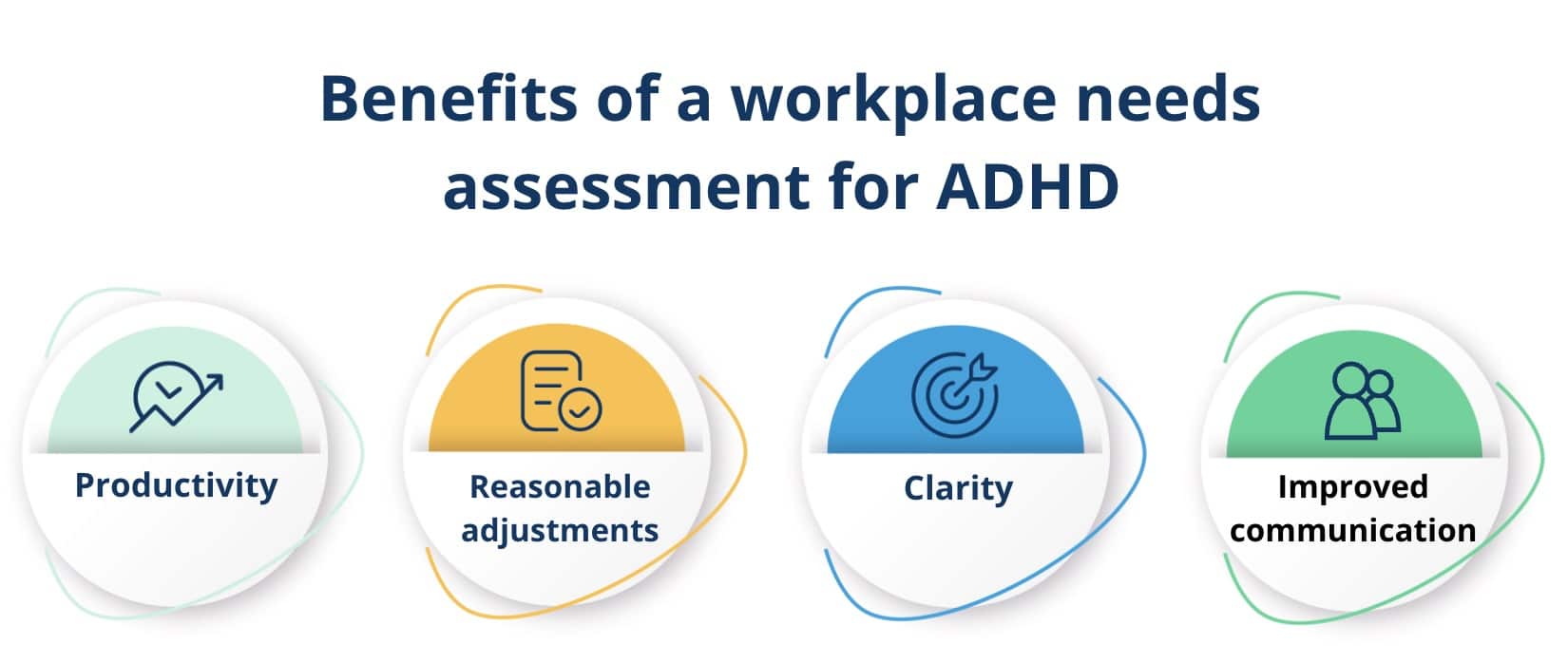
Benefits of a workplace needs assessment for late diagnosis ADHD
A workplace needs assessment for ADHD can help you in several ways:
Clarity
The assessment is tailored uniquely to you, so people who’ve had an assessment with us report much greater clarity, self-compassion and understanding
Reasonable adjustments
The report includes straightforward suggestions for potential reasonable adjustments that are cost-effective and easy to implement at work
Productivity
Implementing the recommendations boosts productivity, job satisfaction, performance, and efficiency across the team.
Improved communication
The report facilitates conversations and understanding across yourself, your line manager and your wider team, promoting a more inclusive workplace culture.
You don’t need to struggle in silence. You don’t need a formal diagnosis. And in many cases, your employer can cover the cost. Read more about how to approach a conversation with your employer about paying for a needs assessment here.
Ready for support?
At Aim Forward, we’re experts in helping neurodivergent adults to thrive in everyday work and study.
Even if you don’t have a formal ADHD diagnosis, we can help you:
- Understand the ADHD traits you experience and how they impact your life
- Find practical support and adjustments that make a difference
- Communicate your needs with confidence
- Thrive at work or study without experiencing burnout
You don’t have to keep masking and you don’t have to burn out. There is a better way, and it starts with understanding yourself, learning self-compassion and getting the support you deserve.
Get in touch with our friendly experts to find out more about how we can help. You can
Contact us, email [email protected] or call us on 0330 133 9600.

Recent Comments